

Paths to Protected Lands

SSU Wine Spectator Learning Center, Copeland Creek Corridor, Native Plant & Butterfly Garden
Tue, Sep 22, 3:00 pm
– 4:50 pm
Admission Fees: none
How did the Bay Area transform from a landscape where nearly all land was privately owned and public access was extremely limited, into the remarkable network of parks, preserves, and trails we know today?
Join the Parks and Protected Areas course for a talk and guided walk exploring the history of protected lands in Sonoma County and the Bay Area. Environmental Historian David Schmidt will trace more than a century of conservation and public-access efforts, from the creation of the region’s earliest parks to campaigns that protected redwood forests and the California coast. Drawing on examples including Armstrong Redwoods, Sonoma County State Parks, and the work of conservation advocate Bill Kortum, Schmidt will explore how public access has helped inspire and advance land conservation throughout the region.
Following the presentation and Q&A, participants will walk along the Copeland Creek Trail to SSU’s Native Plant Garden, where Schmidt, CEI Director Kerry Wininger, and Environmental Science Professor Tom Robinson will discuss how trails connect people, communities, and protected lands, and how creating opportunities for people to experience a landscape can become a powerful tool for protecting it.
Presenter
David Schmidt, Environmental Historian and author
David is a lifelong San Francisco Bay Area resident, naturalist, and environmental historian. He worked as a writer in the public affairs office of the U.S. Environmental Protection Agency in San Francisco from 1991 to 2021. An avid hiker and backpacker, he has led dozens of hikes for the Greenbelt Alliance (www.greenbelt.org) in the region's extensive public parklands. David has volunteered on habitat restoration projects for the Golden Gate National Parks and the California Native Plant Society in Marin, San Francisco, and San Mateo Counties since 1991. He is also the author of “Citizen Lawmakers: The Ballot Initiative Revolution” and a 2025 work “San Francisco Bay Area: An Environmental History,” tracing how natural forces and human choices have shaped the landscape over thousands of years.
Logistics
This event is free of charge!
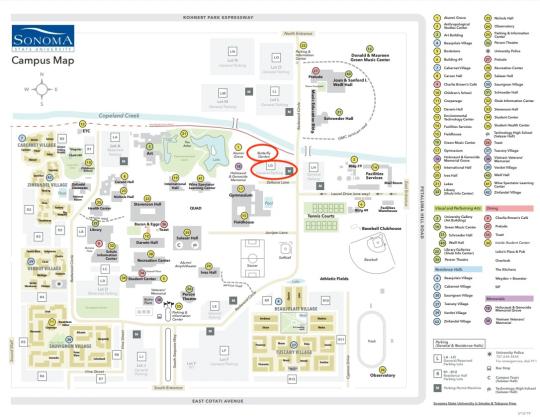
We will meet at SSU Wine Spectator Learning Center, room 1001 (Young's Market Classroom) for the presentation, then walk together to the Copeland Creek Corridor and Native Plant 7 Butterfly Garden. The Wine Business Spectator Learning Center is located on the north-central/east side of campus, just south of the largest lake, closest to Parking Lot G. We recommend purchasing a Daily Parking Permit in advance by clicking here then selecting "Sonoma State,” or you can take public transportation to the bus stop at the campus south entrance on Redwood Drive.
No previous experience or knowledge is required to participate. The maximum distance will be less than 1 mile on relatively flat, unpaved ground.
Participants must sign a waiver upon arrival. All minors must be accompanied by a legal guardian. Smoking and tobacco products are not permitted on the SSU campus. Restrooms are available on site. This is a rain or shine event, as the event will be moved inside if necessary.
What to Bring
Please bring sun, light rain, and insect protection as needed, a water bottle, notebook or journal with something to write with, and footwear for walking in gardens and dirt paths.
How to Sign Up
See registration link above. Each participant should register separately.
This event is free of charge.
About the Center
Sonoma State University’s Center for Environmental Inquiry empowers university students to work with community members on the environmental challenges of the North Bay. Our mission is to create an engaged and environmentally ready society, one where all people have the skills to find solutions to the challenges facing our earth. SSU Preserves are open to everyone engaged in education or research. Reservations are required.